Persons
Profiles of the key individuals who have contributed to the investigation and documentation of the Moonshaft mystery.
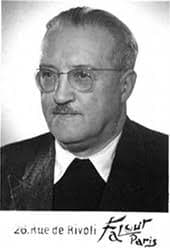
Antonín T. Horák
Discoverer & Original Witness (1897–1976)
A linguist and captain in the Slovak National Uprising who, while hiding from German forces in October 1944, explored a cave and documented a crescent-shaped shaft with glass-smooth, blue-black walls. He later emigrated to the United States and settled in Pueblo, Colorado, spending decades trying to persuade scientists to study his 'moonshaft.' His war journal, published in NSS News in March 1965, is the sole first-hand record of the cave and the foundation of every later search.
Key Contributions
- •Discovery and six-day documentation of the crescent shaft (October 1944)
- •A detailed field journal with sketches — the only primary source for the cave
- •Publication in NSS News (1965) that brought the Moonshaft to international attention

Walter Pavliš
Speleologist, Field & Archival Researcher
Walter Pavliš is a Czech speleologist and field researcher who has dedicated years to systematically exploring cave systems in the mountain ranges around Stará Ľubovňa in search of the Moonshaft. His expertise in cave surveying and underground navigation has been instrumental in narrowing down suspected locations. More recently, he has extended his work into genealogical and archival research, reconstructing Antonín Horák's family origins from period European records to better illuminate the discoverer's background.
Key Contributions
- •Systematic cave surveys in the mountain ranges around Stará Ľubovňa
- •Field documentation of vertical shaft features
- •Coordination with Slovak Speleological Society expeditions
- •Genealogical and archival research tracing Antonín Horák's family origins
Petr Sittek
Archivist & Historical Researcher
Petr Sittek is a Czech researcher and archivist who has uncovered and preserved key historical documents related to the Moonshaft legend. His archival work has surfaced rare primary sources, including materials from the 1970 APRO expedition planning and documents from the MUFON UFO Journal.
Key Contributions
- •Discovery and preservation of 1970 APRO expedition documents
- •Archival research in international UFO and paranormal research collections
- •Sourcing and sharing of primary documents with the research community
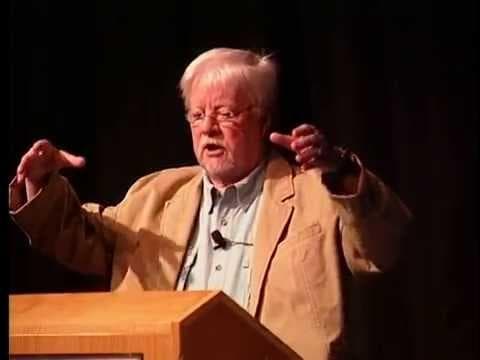
Ted Phillips
Physical Trace Researcher
Ted Phillips was an American researcher widely regarded as the world's foremost authority on physical trace cases — incidents where UFOs or unidentified phenomena reportedly leave measurable effects on the environment. A colleague of Dr. J. Allen Hynek, Phillips was one of the experts assembled by APRO in 1970 to evaluate Antonín Horák's Moonshaft account and plan a scientific expedition to Czechoslovakia. The expedition was ultimately called off, but his involvement illustrates the level of credibility the Moonshaft claim commanded among serious researchers of the era. Ted Phillips has since passed away. His work is continued by Thomas Ferrario.
Key Contributions
- •Expert evaluation of the Moonshaft claim during APRO's 1970 expedition planning
- •Collaboration with Dr. J. Allen Hynek on the proposed Czechoslovakia investigation
- •Field methodology contributions to the international research effort

Thomas Ferrario
Physical-Trace Researcher (continuing Ted Phillips's work)
An American researcher who continues the physical-trace work of the late Ted Phillips, including interest in the Moonshaft. As Phillips's successor he carries forward the field methodology and case files of one of the experts APRO once assembled to evaluate Horák's account.
Key Contributions
- •Continuation of Ted Phillips's physical-trace research and case files
- •Ongoing custodianship of the Moonshaft-related material Phillips left behind
Don Richmond
APRO Member & Deputy Sheriff, Pueblo
An APRO member and deputy sheriff in Pueblo, Colorado who in June 1970 presented Antonín Horák's account at APRO headquarters in Tucson, helping set the 1970 expedition planning in motion. He was a key early link between Horák and organized research into the case.
Key Contributions
- •Presented Horák's Moonshaft account to APRO (June 1970)
- •Helped initiate the APRO expedition-planning effort
- •Early bridge between Horák and the international research community
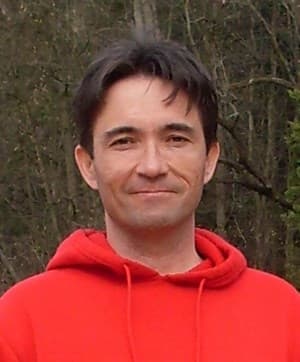
Martin Lavay
Author & Researcher
Czech author of the 2019 book Měsíční šachta (The Moonshaft), the fullest popular synthesis of the legend, its history, and the many theories about it. For many readers — including the founder of this archive — Lavay’s book was the spark that turned curiosity into an active search.
Key Contributions
- •Authored Měsíční šachta (2019), the most comprehensive book on the case
- •Compiled the research history, theory catalogue, and a 2019 field expedition
- •Introduced a new generation of readers to the Moonshaft mystery
Eduard Piovarči
Speleologist & Chronicler of the Slovak Search
A Slovak speleologist from Žilina with decades of caving in the Malá Fatra, Eduard Piovarči has followed the Moonshaft since the mid-1980s. His Terchová caving group joined the search in 1985 and ran its own field actions in the Low Tatras and the Belianske Tatras. In 2000 he published the first comprehensive review of the whole affair in the bulletin of the Slovak Speleological Society — a sceptical but fair account that retraces every Slovak and Czech search since 1972, weighs the theories, and closes with a bibliography and a map of the areas searched.
Key Contributions
- •Field searches with the Terchová caving group (Low Tatras 1986, Belianske Tatras 1993)
- •"Moon Cave — reality, or just a modern myth?" (Spravodaj SSS 3/2000), the first full review of the search history
- •Bibliography and search-area map that later researchers built on
Ján Ducár
Caver & Author, Eastern Slovakia
A caver and writer from the Prešov region, Ján Ducár has been a long-standing voice in the Slovak Moonshaft debate. In the same 2000 issue of the Slovak Speleological Society's bulletin he answered Piovarči's review with a deadpan satire proposing that Slovak cavers should simply build the Moonshaft themselves as a tourist attraction, souvenir pickaxes included — a piece that skewers the hype around the legend while quietly listing everyone who had chased it. He has since taken the search seriously, examining candidate sites in eastern Slovakia and serving as vice-president of the Club of Friends of Captain Horák.
Key Contributions
- •"A serious word on the matter: the Moonshaft" (Spravodaj SSS 3/2000) — a satire of the Moonshaft craze
- •Field reconnaissance of candidate sites in eastern Slovakia
- •Vice-president of the Club of Friends of Captain Horák
Miloš Jesenský
Author & Researcher of Historical Mysteries
A Slovak writer and researcher of historical mysteries, Miloš Jesenský took up the Moonshaft in the 1990s and combed the wartime archives for any trace of Horák's unit or of the shaft itself. Like every archival search before it his stalled at a dead end, and Piovarči's 2000 review records it alongside the parallel effort of G. Skřivánek in Žilina. With the Polish author Robert K. Leśniakiewicz he published "Tajemství měsíční jeskyně" in the Prague magazine Fantastické fakta (11/1998), the article that carried the story to a broad Czech and Slovak readership and set it among the wider legends of structures hidden under the Carpathians.
Key Contributions
- •1990s search of wartime archives for Horák's unit and the shaft
- •"Tajemství měsíční jeskyně" with R. K. Leśniakiewicz (Fantastické fakta 11/1998)
- •Carried the Moonshaft to a wide Czech and Slovak readership
Robert K. Leśniakiewicz
Polish Author & Researcher of Anomalies
A Polish writer and investigator of anomalies who gave the Moonshaft its most far-reaching reading. Picking up the article he had co-written with Miloš Jesenský, he argued in Fantastické fakta 12/1998 that the shaft is evidence of a civilisation of the "Hyperborean era" some twenty thousand years ago and belongs with the "glass tunnels" tradition and its Agartha underworld — and that the mountain named in that legend may be a deliberate substitution for a range further east. Piovarči's 2000 review lists the idea among the speculative readings; it is kept here as part of the story's reception, not as a finding.
Key Contributions
- •"Měsíční jaskyně — další díl záhady" (Fantastické fakta 12/1998)
- •"Tajemství měsíční jeskyně" with Miloš Jesenský (Fantastické fakta 11/1998)
- •The Hyperborean-era and "glass tunnels" reading catalogued in Piovarči's 2000 review
Jacques Bergier
French Author & Populariser (1912–1978)
The French writer and chemist Jacques Bergier, co-author of "Le Matin des magiciens", is the reason the Moonshaft became a European story at all. He picked up Horák's account after its 1965 publication in NSS News and retold it in "Le livre de l'inexplicable" (1972), calling the shaft the greatest mystery of the century and reading it, first of anyone in print, as the work of an unknown cosmic civilisation. Most of the Czechoslovak searchers who followed came to the case through that book rather than the original journal: Ivan Mackerle's first search report of 1982 is explicitly based on it, and the authors who proposed a resonator theory at a Bratislava conference in 1983 had the story from Bergier too.
Key Contributions
- •"Le livre de l'inexplicable" (1972) — the retelling that carried Horák's account to Europe
- •First in print to read the shaft as the work of an unknown cosmic civilisation
- •Starting point of the Czechoslovak search: Mackerle's 1982 report follows his book, not NSS News